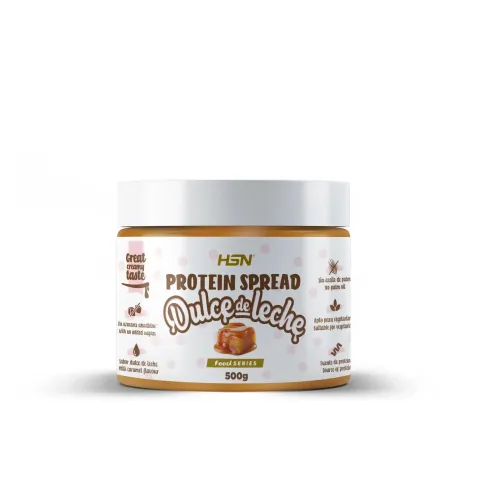
A dulce de leche cream that fits you
Dulce de leche protein cream from FoodSeries is a protein cream, with dulce de leche flavor, sweetened.
The modern alternative to classic sweet creams, made for those who want to enjoy the taste without hassle. We nailed an authentic dulce de leche flavor, rich and creamy, but with a more interesting nutritional profile. It’s not about changing what you love, but improving it. Its recipe is designed to offer a balance between pleasure and nutrition, with more protein and less sugar than other similar options on the market.
Enjoy the classic taste, with a formula made for today.
Real dulce de leche flavor
A recipe that makes the difference
From the very first spoonful, this cream stands out for its flavor. It’s not a 'fit' version of a spread: it truly tastes like dulce de leche, with that caramelized, sweet, and enveloping flavor that makes it irresistible.
Creamy texture and easy to use
Its texture is smooth, uniform, and easy to spread. It doesn’t harden at room temperature nor feel heavy, making it perfect both for spreading and adding to recipes.
Tip: Don’t store the cream in the fridge, and if you live in a place with very low room temperature, we recommend keeping it somewhere warmer. Low temperatures can affect the cream’s consistency, making it harden and dry out.
More protein, less sugar: a smart alternative
This spread is formulated to offer a better nutritional profile compared to other conventional sweet creams. This means:
- Higher protein content.
- Lower sugar amount.
- Better compatibility with a balanced diet.
It’s a great option whether you train or just want to take care of your diet without giving up little treats.
How to enjoy it: ideas for your daily routine
1. Breakfasts you’ll crave
Spread the cream on toast, whole grain bread, or pancakes. You can also add it to your porridge or oatmeal bowls for a sweet and different twist.
2. Quick and tasty snacks
Pair it with fruit like banana or apple for a more complete snack. Pour a moderate amount of cream into a bowl and use it as a dip.
3. Recipes for an extra flavor boost
Use it as a topping or filling in homemade recipes. For example:
- On pancakes or waffles.
- As crepe filling.
- Mixed into yogurt or fresh whipped cheese.
Pair it with HSN products
If you want more complete ideas, you can easily combine it with other products:
- Evocakes 2.0: add a layer of cream on top to transform your fitness pancakes.
- Oat flour: to prepare fit recipes with a special touch.
- Protein powders: mix a small amount to add more flavor to your shakes.
For athletes… and anyone who wants to take care of themselves
Although its nutritional profile makes it interesting for people following high-protein diets, this cream goes way beyond that.
It’s perfect for:
- Active people who want more balanced options.
- Those looking to reduce sugar intake when they want to treat themselves.
- Anyone who wants to enjoy something sweet without feeling off their routine.
You don’t need to follow a strict diet to include it in your daily life. It’s simply a smarter way to enjoy.
Why choose this protein cream
- Achieved flavor, true to traditional dulce de leche.
- Improved composition compared to conventional options, with more protein and less sugar.
- Great versatility in cooking and for direct use.
- Fits different eating styles.
It’s a cream made for those who don’t want to choose between taste and keeping their lifestyle in check.
Scientific bibliography
- Bellisle, F. (2014). Meals and snacking, diet quality and energy balance. Physiology & Behavior, 134, 38–43.
- Leidy, H. J., Ortinau, L. C., Douglas, S. M., & Hoertel, H. A. (2013). Beneficial effects of a higher-protein breakfast on appetite control, satiety, and food intake in healthy adults. The American Journal of Clinical Nutrition, 97(4), 677–688.
- Blundell, J. E., et al. (2010). Appetite control: methodological aspects of the evaluation of foods. Obesity Reviews, 11(3), 251–270.
- Yeomans, M. R. (2017). Adverse effects of consuming high fat–sugar diets on cognition: implications for understanding obesity. Proceedings of the Nutrition Society, 76(4), 455–465.
- Drewnowski, A. (1997). Taste preferences and food intake. Annual Review of Nutrition, 17, 237–253.