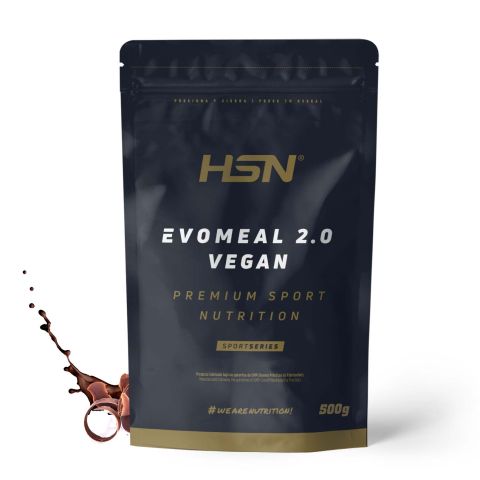
What is Evomeal 2.0 (Meal Replacement) Vegan
Evomeal 2.0 (Meal Replacement) Vegan from SportSeries is a meal replacement for weight control, tasty, based on plant proteins, carbohydrates, conjugated linoleic acid, minerals and vitamins, with sweetener.
Formulated to replace meals easily within a calorie-restricted diet: The goal is clear... To be a complete shake, with plant proteins and a creamy flavor experience to make sticking to your routine easier. A convenient option for busy days: a complete shake, easy to integrate and designed to fit sports and weight control strategies.
Evomeal vegan is a vegan, gluten-free, GMO-free and allergen-free meal replacement. It’s designed to mix and drink easily.
What it’s for (and how to use it depending on your goal)
- Has a high protein content
- Replacing one daily meal in a calorie-restricted diet with a meal replacement helps maintain body weight after weight loss*
- Replacing two daily meals in a calorie-restricted diet with a meal replacement helps with body weight loss*
* It’s important to keep an adequate daily fluid intake. Evomeal 2.0 is intended for intentional use only as part of a calorie-restricted diet and other foods are needed as part of it.
If you replace 1 meal a day: maintenance approach
Replacing one meal daily works great when you want a balanced strategy to keep your achieved weight: it helps maintain a clear diet structure without giving up the other meals of the day, which will still be part of a varied diet.
If you replace 2 meals a day: weight loss approach
In protocols more focused on weight loss, replacing two meals daily is used as part of a calorie-restricted strategy. The key is that the rest of the day is well planned and the approach matches your goal and activity.
Ingredients and nutritional profile: what really matters
Plant proteins as the base
The formula relies on pea protein isolate (from Pisum sativum) and rice protein (from Oryza sativa), a very common combo in vegan sports nutrition for its versatility in shakes and complete amino acid profile, making the combo a complete protein blend.
With carbs and fiber for the perfect texture
We used ingredients like hydrolyzed rice flour, maltodextrin and polydextrose, plus thickeners (guar gum, carboxymethylcellulose, xanthan gum) to get a creamy and super tasty texture.
Added vitamins and minerals
We complete the nutritional profile with a varied and complete supply of vitamins and minerals, designed so the shake fits as a meal replacement within a calorie-restricted diet.
Flavor and user experience: creamy, easy and filling
Evomeal 2.0 Vegan is designed so the shake is comfortable and makes you want more: creamy texture, amazing well-achieved flavors and a feeling of fullness that fits especially well when you replace a meal.
You have options based on your preferences: flavors ranging from sweeter options (like chocolate) to milder alternatives (like vanilla), so you find the one that suits you best no matter your taste.
Who is this product for
Active people who need a quick and planned meal
Perfect for workdays, trips or long days, when eating well shouldn’t depend on having time to cook.
Those looking for a weight control approach within a planned diet
Fits calorie-restriction strategies, both in maintenance phases and weight loss phases, always as part of a varied diet.
Vegan athletes who want a meal replacement
If you prefer an option without animal ingredients, here’s a convenient format aimed at practical use as part of your sports routine.
Usage tips: how to fit it into your daily life
Breakfast / Lunch / Dinner, whenever suits you
Practically, many people use it to replace one or two of the three main meals: it lets you have a controlled meal when you’re less keen on cooking. Adjust the timing to your routine and how you spread the rest of your meals.
Work, trips and “no kitchen” days
On days when you know you’re tight on time, it’s an easy way to ensure a complete meal without resorting to improvised options. The key is to plan which meal you’ll replace and keep the rest of the day varied with different foods.
Pro tip: if you use it on busy days, make sure to organize the rest of your meals simply, and don’t rely only on Evomeal for all your meals of the day.
Recommended combos
During definition or maintenance training phases
If your goal is to “add protein” during the day
For training days with peri-workout drinks
Evomeal 2.0 Vegan vs Evomeal 2.0
Both products serve the same function as meal replacements within a calorie-restricted diet. The main difference is the protein source and how they fit dietary preferences.
Protein source
- Evomeal 2.0 Vegan: plant proteins (pea and rice).
- Evomeal 2.0: dairy proteins (whey) and other dairy ingredients.
Dietary profile
- Vegan: vegan option, gluten-free, GMO-free and allergen-free.
- Non-vegan: option with dairy ingredients.
In practice
Functionally, they’re equivalent: the choice depends on your dietary preferences (vegan vs dairy) and how each protein source suits you.
FAQs
Can it replace all meals of the day?
No. A meal replacement replaces part of your diet and must be integrated within a varied diet.
Is it only for weight loss?
No. It’s also used as a quick and planned meal in contexts like work, trips or busy days.
Is it suitable for vegans?
Yes. Evomeal 2.0 (Meal Replacement) Vegan is formulated for vegan diets and is also gluten-free, GMO-free and allergen-free.
Do I have to take it around training?
Not necessarily. Many people take it before or after training for convenience, but ideally it’s used as a replacement for one or two main meals of the day.
A practical way to replace meals
Evomeal 2.0 (Meal Replacement) Vegan is designed for those who want a complete meal in shake form, with plant proteins and a formula with quality ingredients: practical, creamy and easy to fit into a real controlled nutrition strategy.
References
- Heymsfield, S. B., van Mierlo, C. A., van der Knaap, H. C., Heo, M., & Frier, H. I. (2003). Weight management using a meal replacement strategy: Meta and pooling analysis from six studies. International Journal of Obesity, 27(5), 537–549.
- Davis, L. M., Coleman, C., Kiel, J., Rampolla, J., Hutchisen, T., Ford, L., Andersen, W., & Hanlon-Mitola, A. (2010). Efficacy of a meal replacement diet plan compared to a food-based diet plan after a period of weight loss and weight maintenance: A randomized controlled trial. Nutrition Journal, 9, 11.
- Astbury, N. M., Piernas, C., Hartmann-Boyce, J., Lapworth, S., Aveyard, P., & Jebb, S. A. (2019). A systematic review and meta-analysis of the effectiveness of meal replacements for weight loss. Obesity Reviews, 20(4), 569–587.
- Min, J., Kim, S. Y., Shin, I. S., Park, Y. B., & Lim, Y. W. (2021). The Effect of Meal Replacement on Weight Loss According to Calorie-Restriction Type and Proportion of Energy Intake: A Systematic Review and Meta-Analysis of Randomized Controlled Trials. Journal of the Academy of Nutrition and Dietetics, 121(8), 1551–1564.e3.
- Khademi, Z., Bayani, M., Naghdi, N., et al. (2024). Meal replacements on obesity and leptin: A systematic review and meta-analysis. Reviews in Endocrine and Metabolic Disorders, 25, 1–16.