Mint oil is your buddy for heavy meals
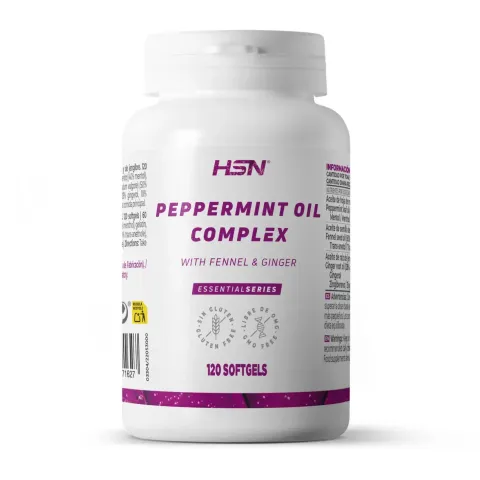
Mint Oil complex from EssentialSeries is a food supplement made with mint, fennel, and ginger, designed to back you up when facing big meals or those days when digestion feels heavier.
We created this “complex” by combining oils of Mentha piperita (mint), Foeniculum vulgare (fennel), and Zingiber officinale (ginger) in a formula made for after eating. The plant selection isn’t random: we bring together 3 classics that, together, are super easy to fit into your daily routine.
If you’re looking to support digestion after meals, Mint Oil Complex is an easy way to do it.
What makes this oil blend special
A simple but well-thought-out formula
Instead of using a ton of ingredients, here the idea is clear: work with three botanical oils widely used in traditional after-meal routines and put them in a pearl format that simplifies use and makes the product more convenient.
The fennel + ginger combo, just what many people want
Some blends stick around for a reason. The combo of mint, fennel, and ginger shows up again and again in wellness routines because of their traditional use and how practical it is to have them all in one product. Plus, here you get them in pearls, making it even easier to take.
When you want consistency, standardization matters
Plants can vary naturally between harvests. That’s why, when we talk about oils, it’s important to check the standardization: it helps keep the experience consistent and quality guaranteed, because you know exactly which key compounds you’re taking.
Mint is standardized in menthol, fennel in trans-anethole, and ginger in gingerol and zingiberene. The key compounds of each plant.
Plant synergy: discover it
Mint: the core of the complex for after eating
Mint (Mentha piperita):
- Helps support digestion.
- Contributes to digestive functions.
- Has a positive influence on gut health.
Mint is the base of this complex. If your goal is to have digestion support on heavy meal days, it’s one of the most used plants by tradition and for the sensations it brings after eating.
Fennel: extra support when you want to feel more comfortable
Fennel (Foeniculum vulgare):
- Supports detoxification systems.
- Helps support digestion.
- Supports digestive tract health.
Fennel is a classic after meals. In our complex, it joins mint oil to complete its digestive focus, especially when you want support in just one dose.
Ginger: the comfort touch that rounds out the formula
Ginger (Zingiber officinale):
- Helps support digestion.
- Contributes to normal intestinal tract function.
Ginger has been used for generations in different cultures as part of post-meal routines. In our complex, it fits naturally alongside mint and fennel, to back you up when you’re after wellness after big meals.
Standardization of key compounds
Why it matters in a herbal extract
With botanical ingredients, natural variation exists. Standardization helps keep a clear quality and consistency standard, avoiding product functionality depending on batch differences.
In practice, this means something simple: The product is always the same, you can analyze and compare it, knowing exactly what you’re using, no surprises.
Tolerance and convenience: a complex made for daily use
Why pearls?
Pearls are a super convenient way to take oils: they’re pre-dosed and make use easier, especially if you don’t want to deal with liquid oils or taste their often strong and distinctive flavors — the pearl protects you from that.
If you’re sensitive to acidity or reflux
Some people are more sensitive to these concentrated oils. In those cases, taking the complex with a meal usually helps, and for this reason and its properties, we recommend taking Mint Oil Complex after a main meal.
The idea is to make it easy to take and easy to keep in your routine, right when you need it most: after heavy meals.
Why these plants are used after meals
Mint, a wellness staple for centuries
Mint has been a big part of traditional infusions and preparations linked to digestive wellness. Over time, its use has evolved into more concentrated and practical formats, like the pearls in our Complex.
Fennel: a custom in many cultures
Fennel shows up in traditional after-meal routines in various countries, thanks to its warm, anise-like aftertaste.
Ginger: from the kitchen to post-meal use
Ginger has been used both in cooking and popular traditions related to comfort after eating. Its gingerol content makes it a perfect fit after heavier meals.
How to use it in your routine
If you’re in bulking training phases or eating more than usual
When you increase calories or have big meals, it’s normal to look for digestion support. This complex is made just for those times when meals feel heavier.
Travel, restaurants, and time changes
When you break your routine, your stomach sometimes feels it too. Having an all-in-1 complex helps keep consistency without hassle.
Recommended combos
- Enzymes: perfect for occasional meals.
- Probiotics: as part of a regular microbiota care routine.
- Fiber: if you’ve had to cut back on fruits and veggies due to fullness, or if you’re really a big fan of them.
Questions and answers
Who is this product for?
For anyone looking for digestion support on heavy meal days or “heavy digestion” and prefers a classic blend in a convenient format.
Can I take it if I tend to have reflux or acidity?
Yes, the pearls have excellent tolerance because the oil doesn’t contact your mouth when you take them. If you’re especially sensitive and notice reflux, taking it after dinner is recommended rather than at other times of the day.
Is it vegan-friendly?
No. The pearls are made with gelatin.
Is the fresh breath effect normal?
Yes. Mint, thanks to its menthol content, usually leaves a clean mouthfeel that’s appreciated, especially after eating, and especially if you’re out and don’t have immediate access to brushing your teeth.
Scientific bibliography
- National Center for Complementary and Integrative Health. (2025, May). Peppermint oil: Usefulness and safety.
- McKay, D. L., & Blumberg, J. B. (2006). A review of the bioactivity and potential health benefits of peppermint tea (Mentha piperita L.). Phytotherapy Research, 20(8), 619–633.
- Chumpitazi, B. P., Kearns, G. L., & Shulman, R. J. (2018). Review article: The physiological effects and safety of peppermint oil and its efficacy in irritable bowel syndrome and other functional disorders. Alimentary Pharmacology & Therapeutics, 47(6), 738–752.
- Badgujar, S. B., Patel, V. V., & Bandivdekar, A. H. (2014). Foeniculum vulgare Mill: A review of its botany, phytochemistry, pharmacology, contemporary application, and toxicology. BioMed Research International, 2014, Article 842674.
- Foudah, A. I., Shakeel, F., Alqarni, M. H., Yusufoglu, H. S., Salkini, M. A., & Alam, P. (2020). Determination of trans-anethole in essential oil, methanolic extract and commercial formulations of Foeniculum vulgare Mill using a green RP-HPTLC-densitometry method. Separations, 7(4), 51.
- Ali, B. H., Blunden, G., Tanira, M. O., & Nemmar, A. (2008). Some phytochemical, pharmacological and toxicological properties of ginger (Zingiber officinale Roscoe): A review of recent research. Food and Chemical Toxicology, 46(2), 409–420.
- Mahboubi, M. (2019). Zingiber officinale Rosc. essential oil, a review on its composition and bioactivity. Clinical Phytoscience, 5, 6.
- Ingrosso, M. R., Ianiro, G., Nee, J., Lembo, A. J., Moayyedi, P., Black, C. J., & Ford, A. C. (2022). Systematic review and meta-analysis: Efficacy of peppermint oil in irritable bowel syndrome. Alimentary Pharmacology & Therapeutics, 56(6), 932–941.